Deep Plane Facelift in San Francisco, CA


A face can change long before the skin itself feels dramatically loose. The cheeks sit lower. The jawline loses some definition. Nasolabial folds deepen. The transition between the lower face and neck becomes heavier. Filler may soften one feature for a while, but adding more facial volume does not reposition tissues that have descended.
That distinction is central to deep plane facelift surgery.
At Pacific Plastic Surgery Group, Edward P. Miranda, MD, FACS, approaches a deep plane facelift in San Francisco as one of several legitimate facelift techniques, not as a procedure every patient should want. His background spans cosmetic surgery and complex reconstructive surgery, where tissue movement, blood supply, scars, nerve anatomy, and healing all matter. The question is not which technique sounds most sophisticated. It is what has actually changed in the face, and which operation can correct it appropriately.
For the right patient, a deep plane approach can reposition deeper facial tissues through the midface and lower face without making skin tension responsible for the result. For another patient, an SMAS facelift, mini facelift, neck procedure, or another form of facial rejuvenation may make more sense.
The operation should fit the anatomy.







A deep plane facelift repositions deeper facial structures beneath portions of the superficial musculoaponeurotic system, or SMAS. By releasing selected retaining attachments and moving the cheek and lower-face tissues together, the procedure can improve jowls, sagging cheeks, nasolabial folds, and jawline definition without relying primarily on tight facial skin.
At a Glance
The term deep plane refers to where the surgeon works, not how dramatic the final result should look.
Beneath the skin and superficial fat lies the superficial musculoaponeurotic system, a fibrous support layer closely associated with the facial muscles. Beneath and around it are ligaments and other deeper layers that help hold the soft tissues of the face in position.
As the aging process continues, those tissues may descend. The cheek loses some of its higher position. More tissue gathers near the mouth and jaw. Sagging skin becomes visible, but the skin is only part of the change.
A deep plane facelift procedure allows selected deeper attachments to be released so these tissues can move more freely. Once the underlying support has been repositioned, excess skin can be redraped and removed without creating the tight quality associated with poorly planned skin-only lifting.
Modern facelift surgery is not simply an exercise in removing loose skin.
Facial aging affects skin, fat, connective tissue, muscle, and even the relationship between the soft tissue envelope and the facial bones beneath it. Sun exposure affects the quality of the surface. Volume changes alter facial contours. Gravity and tissue laxity change position.
A good surgical plan separates those problems.
The deep plane technique is especially relevant when tissue position is the dominant concern. By working with the deeper layer as a connected unit, the surgeon can address midface descent and lower-face heaviness without depending on excessive tension across the facial skin.
This is also why phrases such as “natural-looking results” should mean something specific. A natural appearance does not come from performing a particular procedure name. It comes from respecting the direction of tissue descent, preserving normal facial movement, planning incisions carefully, and avoiding correction that alters facial contours beyond what suits the patient.

Patients researching facelift San Francisco options often encounter comparisons between an SMAS facelift and a deep plane facelift.
The useful distinction is anatomical.
A SMAS facelift works with the SMAS directly. Depending on the surgeon and patient, that layer may be tightened, folded, repositioned, or partially excised.
A deep plane facelift works beneath portions of the SMAS, allowing selected retaining ligaments to be released and the overlying tissues to move together.
Unlike traditional facelift techniques that rely heavily on skin tension, both contemporary SMAS and deep plane approaches attempt to address deeper support. This is why calling one technique “modern” and another “outdated” is usually too simplistic.
There are also variations within each category. An extended deep plane facelift may involve broader release and mobilization than a more limited deep plane operation. A mini facelift surgery usually treats a smaller portion of the lower face with less extensive dissection. Other facelift procedures occupy territory between those examples.
No single method wins every comparison.
The right choice depends on facial aging, tissue position, skin quality, previous surgery, neck anatomy, desired correction, and how much surgery is justified by the expected benefit.
A deep plane facelift is best understood through relationships rather than isolated lines.
The midface contains the cheek and the tissues beneath the lower eyelid. As these structures descend, the upper cheek may look flatter while the lower cheek becomes heavier.
That shift contributes to sagging cheeks, stronger nasolabial folds, and a less distinct transition between the cheek and jaw.
Repositioning the deeper facial tissues can restore support without simply adding volume.
If true deflation is also present, Dr. Miranda may discuss fat grafting to restore facial volume where it has actually been lost. A lift moves tissue. Fat grafting replaces volume. They solve different problems.
Jowls form as lower-face tissues descend beyond the natural border of the jaw.
Deep plane surgery can reposition these tissues and improve the relationship between the cheek, jawline, and neck. The objective is better facial harmony, not an aggressively carved lower face.
A convincing result should still look appropriate beside the chin, cheeks, neck, and facial skeleton.
Nasolabial folds become more pronounced when cheek tissue descends against them.
A deep plane facelift may soften those folds by repositioning the tissues contributing to them. It does not erase every crease.
The same is true of deep wrinkles elsewhere. Some are structural. Others are caused by skin quality, repeated muscle movement, or sun damage.
A facelift treats position.
Treatments such as laser skin resurfacing address the surface and may be considered separately when texture, fine lines, or pigmentation are also concerns.
A neck lift may be performed with a deep plane facelift, but it is not automatically part of the procedure.
The neck has its own anatomy.
Loose neck skin, platysma bands, superficial fat, deeper fat, and chin projection can all affect the profile. A facelift may improve the upper neck simply by repositioning lower-face tissues, while another patient may require direct neck surgery.
This is one reason prices and operative plans vary so widely between practices in the San Francisco Bay Area.
One surgeon’s “deep plane facelift” may describe facial repositioning alone. Another may routinely include substantial neck work, platysma treatment, or additional procedures under the same label.
During a facelift consultation, Dr. Miranda evaluates the face and neck separately before deciding what belongs in one operation.

Good facelift patients usually have a structural concern that surgery can realistically address.
Common findings include:
Age alone does not determine candidacy.
Some younger patients have significant early tissue descent because of genetics, facial structure, weight change, or other factors. Other people have good tissue support well into later decades and do not need a full facelift.
Health matters.
A good candidate should generally be a nonsmoker, be medically appropriate for elective surgery, and have realistic expectations about scars, recovery, and what the procedure can and cannot change.
Previous facial fillers, thread lifts, fat grafting, and other facial procedures should also be disclosed. They can alter tissue planes and affect surgical planning.
Not every change in the face belongs in facelift surgery.
Upper-eyelid hooding or lower-eyelid bags may be better addressed with eyelid surgery, sometimes casually called an eyelid lift.
A low or heavy brow may call for a brow lift.
Volume loss may respond to fat grafting or carefully selected fillers.
Sun damage, pigmentation, and superficial lines may be better treated with resurfacing.
A patient with limited lower-face laxity may be a better candidate for a mini facelift than a more extensive deep plane operation.
This is where comprehensive facial rejuvenation becomes useful as a planning concept rather than a reason to perform more procedures. The point is to identify which part of the face is creating the concern and treat that part appropriately.
Sometimes more comprehensive rejuvenation requires several coordinated procedures. Sometimes it means doing less.

Dr. Miranda approaches facial plastic surgery by looking at the face as a system.
He evaluates midface position, lower-face descent, neck anatomy, facial volume, chin projection, skin quality, hairline, sideburn position, ear anatomy, existing scars, previous injections, and asymmetry.
The natural skin creases around the ear matter because they influence incision placement. Hairline shape matters because aggressive skin movement can distort it. The neck matters because correcting the jawline without addressing visible neck laxity can leave the result incomplete.
So does recovery.
A patient who works from home may return to a laptop before being comfortable on camera. Someone commuting across the Bay Area may need to account for driving, BART, walking, and time upright. A steep San Francisco block feels different during early facelift recovery.
Those are surgical-planning details because they affect when the operation makes sense.

At our practice in San Francisco deep plane facelift is a substantial surgical procedure performed through carefully planned facelift incisions around the ear and hair-bearing areas.
The incision typically begins near the temple or sideburn, follows the contours of the ear, and continues behind the ear toward the lower scalp.
The surgeon then accesses the appropriate deeper facial structures. Selected retaining ligaments are released, and the soft tissues of the cheek and lower face are repositioned.
If the neck requires treatment, the operation may include platysma work, fat adjustment, or an additional small incision beneath the chin.
Once deeper support has been restored, the skin is redraped and excess skin is removed conservatively.
The skin should not be carrying the entire correction.
That distinction is central to deep plane facelift surgery and to modern facelift procedures more broadly.
Every facelift creates scars.
A well-planned operation places them where the surrounding anatomy can help disguise them: along the hairline, within the contours around the ear, and behind the ear toward the scalp.
The quality of facelift scars depends on incision placement, closure technique, skin tension, individual healing, sun exposure, and postoperative care.
Early scars may look pink or firm. They usually soften over time.
The appropriate promise is careful scar planning and support for optimal healing, not invisible scars.

Deep plane facelift recovery typically involves the most noticeable swelling and bruising during the first week, with many patients feeling socially presentable around 10–14 days. Numbness, firmness, tightness, and residual swelling can continue for several weeks or months.
Swelling usually increases before it begins to improve.
A dressing may be used, and some facelift procedures involve temporary drains. Patients are usually instructed to keep the head elevated, rest, take short walks, and follow specific incision-care directions.
The face can temporarily look fuller than expected.
That is swelling, not the final facial contour.
Many patients return to office work, video calls, or social activities at roughly this stage.
The exact timing varies.
Residual swelling and bruising may still be noticeable under certain lighting or on camera, which matters for patients with public-facing careers in San Francisco.
The face usually begins feeling more familiar. Swelling continues to improve, and activity is gradually increased after clearance.
The deeper tissues are still healing even when the skin looks relatively normal.
Residual swelling resolves. Scars soften. Sensation continues normalizing.
The operation gradually becomes less obvious.
That is where natural-looking results become easier to judge.
All facial surgery carries risk.
Potential complications include bleeding, hematoma, infection, fluid accumulation, altered sensation, poor wound healing, hair loss near an incision, visible scarring, asymmetry, skin-healing problems, prolonged swelling, and revision surgery.
Facial nerve injury or weakness is also a recognized risk because facial nerve branches travel through the tissues involved in facelift surgery.
A deep plane approach is not risk-free simply because it may reduce dependence on skin tension.
The quality of the operation depends on anatomical knowledge, technical control, patient selection, and postoperative care.
A deep plane facelift can create long-lasting improvement because deeper facial tissues are repositioned rather than temporarily tightened at the skin surface.
It does not stop the aging process.
Skin quality, genetics, weight changes, sun exposure, nicotine, facial volume loss, and general health continue influencing the face.
A patient may maintain a refreshed appearance for years while still aging naturally.
Hard promises about looking a fixed number of years younger are not useful. The objective is durable structural improvement with a natural appearance, not a permanently frozen youthful appearance.
Look beyond the jawline.
Evaluate the cheek, nasolabial folds, mouth, neck, ears, hairline, and scars.
Does the face look balanced?
Does the jawline look cleaner without becoming artificially sharp?
Does the neck fit the corrected lower face?
Have the ears or sideburns been distorted?
Are facial expressions still believable?
Before-and-after photographs should help patients understand a surgeon’s judgment and consistency. They should not be treated as a guarantee of identical results.

There is no universal deep plane facelift cost in San Francisco because the same procedure name can describe very different surgical plans.
Pricing reflects the complexity of the anatomy.
The total may be influenced by:
This explains why published San Francisco prices vary dramatically.
A limited face procedure and a more comprehensive face-and-neck operation are not interchangeable simply because both are called deep plane facelifts.
PPSG provides a detailed estimate after Dr. Miranda has evaluated the anatomy and defined the operation.
Patients looking for a deep plane facelift surgeon in San Francisco should look beyond procedure branding.
Training matters. Board certification matters. Experience with both aesthetic and reconstructive anatomy matters. Scar placement, before-and-after work, follow-up, and the quality of the consultation matter too.
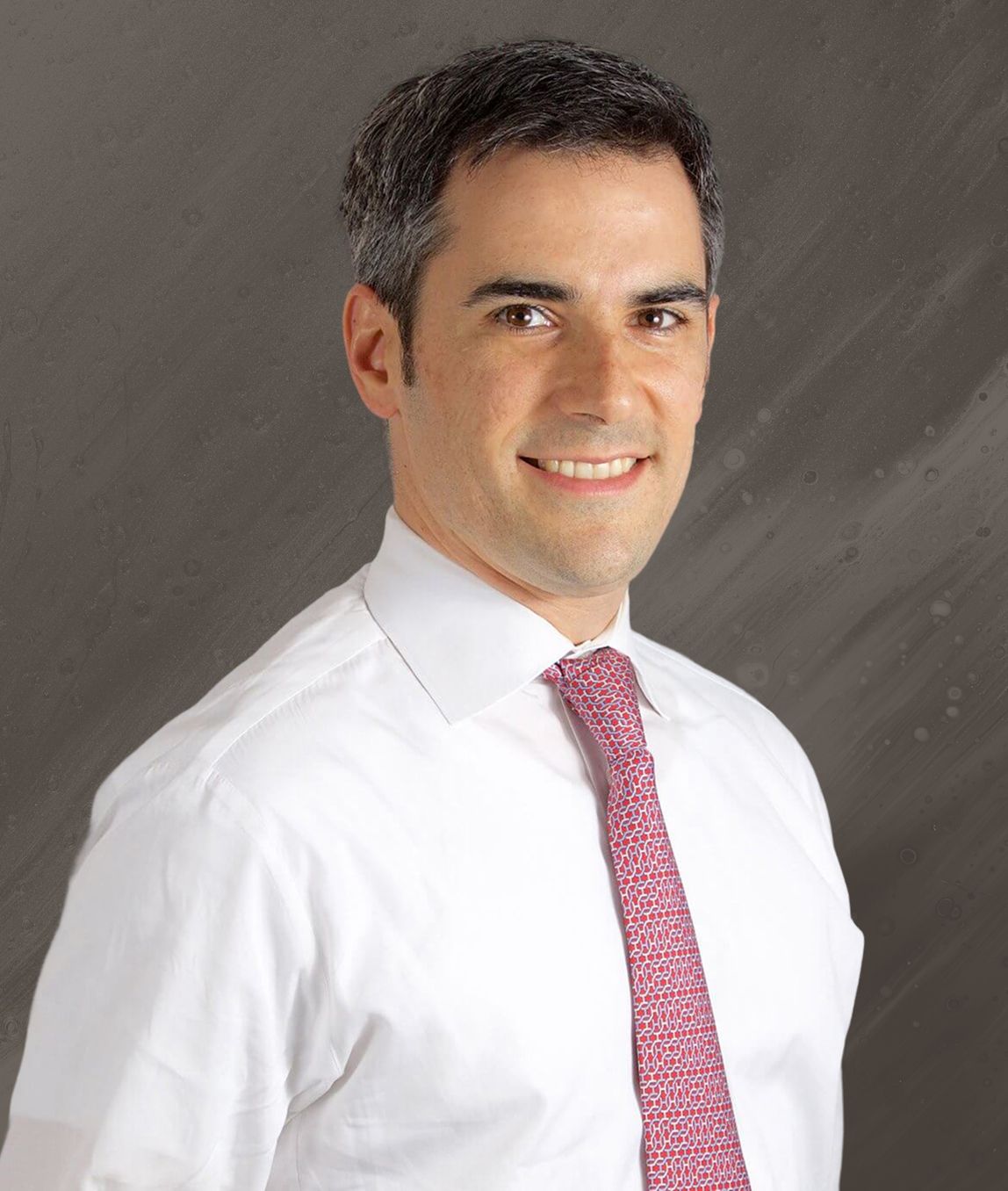
Edward P. Miranda, MD, FACS is certified by the American Board of Plastic Surgery and trained at Cornell, UCSF, and Memorial Sloan Kettering. His work spans plastic surgery, cosmetic facial surgery, and complex reconstruction.
That background shapes the PPSG approach.
A surgeon should know how to move tissue. A good reconstructive surgeon also spends a career thinking about blood supply, tension, scars, nerve anatomy, and what happens when healing is less predictable than expected.
Those principles carry directly into facelift surgery.
A facelift consultation should leave you with a clearer understanding of the face, not simply a procedure recommendation.
Dr. Miranda evaluates the midface, lower face, jawline, neck, facial skin, previous procedures, and the changes that are actually bothering you. He can then explain whether a deep plane facelift, another SMAS technique, mini facelift, neck lift, or combination of procedures makes sense.
For patients considering facial rejuvenation in the San Francisco Bay Area, that distinction is more useful than choosing a technique before anyone has examined the anatomy.
Pacific Plastic Surgery Group welcomes patients from San Francisco, Marin, the Peninsula, San Jose, the East Bay, and throughout the Bay Area.
Schedule a consultation with Pacific Plastic Surgery Group to discuss which approach fits your face.
There is no single “right age.” Dr. Miranda looks at midface descent, jowling, jawline changes, skin quality, previous treatments, and overall health. A patient with little structural descent may be better served by waiting, even if facial surgery is becoming more common at younger ages. (quirozmd.com)
No. The face and neck are connected, but they are evaluated separately. Platysma bands, loose neck skin, fat beneath the chin, and deeper neck anatomy may require additional treatment. Dr. Miranda determines how much neck work belongs in the surgical plan rather than assuming every deep plane facelift needs the same operation.
Many patients plan roughly two weeks before returning to visible professional or social commitments, but residual swelling, firmness, or bruising can last longer. Camera-facing work can make subtle swelling more noticeable than it feels in daily life. Schedule important presentations, photography, or events with extra room rather than treating day 14 as a guaranteed deadline.
Sometimes the issue is no longer missing volume. Descended cheek tissue can make the lower face feel heavier and deepen nasolabial folds even after filler. A facelift repositions tissue; filler adds volume. Dr. Miranda evaluates which problem is actually present, since continuing to add volume to a structurally descended face can work against the result you want.
Tell Dr. Miranda exactly what was done, where, and when. Previous filler, thread lifts, scars, and surgery can change tissue planes and affect operative planning. They do not automatically rule out a deep plane facelift, but they may change the dissection, timing, or procedure recommended.
Not for every face. Both techniques address deeper facial support, and current evidence has not established one approach as universally superior. Deep plane surgery may offer useful mobility when midface descent and retaining ligaments are important parts of the problem. A different SMAS approach may be entirely appropriate for another patient. Technique should follow anatomy. (pubmed.ncbi.nlm.nih.gov)
A deep plane facelift can create long-lasting structural improvement, but there is no expiration date that applies to every patient. Skin quality, genetics, sun exposure, weight changes, nicotine use, and continued aging all influence how the face changes afterward. Surgery repositions tissue; it does not stop the aging process.